
At its best in Fall and Winter — best after dark.
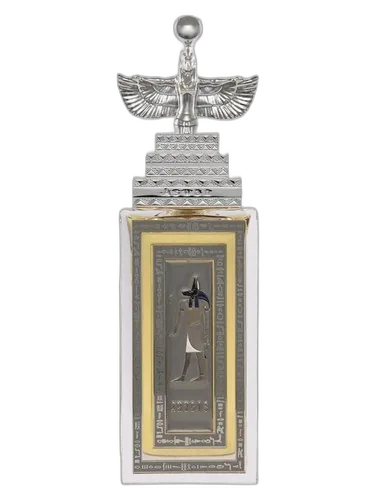
Anubis by Aswan is a Woody Aromatic fragrance for women and men. This is a new fragrance. Anubis was launched in 2025. The nose behind this fragrance is Ibrahim Al Zoabi. Top notes are Juniper Berries, Lemon Verbena, Bergamot, Nutmeg and Aldehydes; middle notes are Cypress, Coriander and Sage; base notes are Woody Notes, Ambergris and Cashmeran. Anubis by Aswan is a woody aromatic fragrance composed by perfumer Ibrahim Al Zoabi and released in 2025. It opens with a bright mix of bergamot and lemon verbena, lifted by aldehydes and the crisp tang of juniper berries with a touch of nutmeg. Aromatic herbs define the heart, where coriander, cypress, and sage add a green-spicy character. The base settles into a musky-woody profile with ambergris, cashmeran, and woody notes, creating a smooth and lingering drydown. Anubis, the Egyptian god of death, mummification, embalming, the afterlife, the underworld, and the cemeteries, was one of the most important and widely venerated deities in the ancient Egyptian pantheon. He was depicted as a man with the head of a jackal, a symbol of protection and guidance in the afterlife. According to Egyptian mythology, Anubis was the son of Osiris, the god of the underworld, and Nephthys, the goddess of protection and childbirth. He was born after Nephthys tricked her brother Seth, the god of chaos and violence, into believing that he was the father of her child. Anubis was raised by Isis, the goddess of magic and healing, and he became a close friend and protector of her son Horus, the god of kingship. Anubis played a vital role in the Egyptian funerary cult, where he was responsible for preparing the bodies of the deceased for the afterlife. He also presided over the Weighing of the Heart ceremony, where the heart of the deceased was weighed against the feather of Ma’at, the goddess of truth and justice. If the heart was lighter than the feather, the deceased was deemed worthy to enter the afterlife. Anubis was a compassionate and benevolent god, and he was often depicted as a protector of the weak and vulnerable. He was also a symbol of hope and new beginnings, as he was associated with the regeneration of the Nile River and the rebirth of the dead.